The Problem With Words

Words do not express thoughts very well. They always become a little different immediately they are expressed, a little distorted, a little foolish.

Hermann Hesse, Siddhartha

Words have been very present in my thoughts lately, both spoken and written words. Over the years there have been numerous times when I have opened my mouth, words have jumbled out, and I immediately wished I could pull them back in. This is impossible. Perhaps the habit held by so many these days to begin any sentence with “I mean” is related to this fear of possibly needing to clarify even before the words are released. Being understood is a treasure; being misunderstood can be painful.

Wordless communication is beautiful; the eyes convey a depth of meaning impossible to reach with spoken words. But I also do crave conversation that is at times rich and thoughtful and other times playful. I even crave the hard conversations that lead to pruning which leads to new growth. For this to happen, eye contact and mutual trust is essential. Joy emerges in the presence of this level of relationship.

Blessed Silence

…what they had to say communicated itself best in the blessed silence of their release and isolation.

Edith Wharton, The Age of Innocence

At times during this past year I have experienced the beauty of shared silence at level deeper than I could have imagined. It is true that silence can feel awkward, but in a relationship of trust, the communication that occurs with the eyes, with touch and through quality of presence transcends words. Anyone who knows me knows that I believe in the beauty of words, both written as well as spoken. I sometimes crave the voice of one I love. In those times, though, when spoken words seem awkward or unnecessary, I am still richly content.

Where words are restrained, the eyes often talk a great deal.

—Samuel Richardson

Recognize the Good

… for her, every day was the same, and when each day is the same as the next, it’s because people fail to recognize the good things that happen in their lives every day that the sun rises.

—Paulo Coelho, The Alchemist

I awakened from a season of life when I often saw each day as the same as the next. During my emergence I came to embrace my personal mantra, “There is always something good.” I often follow that with “even if it’s just the smell of coffee.”  It was long before I read The Alchemist that I began to not only embrace this for myself but to share it with others and to frequently close written or typed communications with “Enjoy Today” or “Enjoy This Day”.

As I began to focus more on the good, I was able to acknowledge the less-good and even the bad. My hope began to have substance. Now I had drive to look for what I could do to begin to make necessary changes in my life situation. I became like a Baudelaire:

This story is about the Baudelaires. And they are the sort of people who know that there’s always something. Something to invent, something to read, something to bite, and something to do, to make a sanctuary, no matter how small. And for this reason, I am happy to say, the Baudelaires were very fortunate indeed.”

—Lemony Snicket, A Series of Unfortunate Events: The Bad Beginning

If you know anything about this story either from the book or the movie, you know that there are a lot of extraordinarily unfortunate events that happen to these children. They always do find something, though. If the Baudelaires can find something, we can always find something “to make a sanctuary, no matter how small.” So could the girl referred to in the The Alchemist.

As I now sort through photos and other artifacts from that difficult season in my life, I can see how much good there was. I am thankful that even as I am poignantly aware that it is impossible to retrieve time and relive the past, my perception of it can shift. Each day was not the same as the next. This is a beautiful awareness.

Enigma of Meaning

Telling someone about what a symbol means is like telling someone how music should make them feel.

Dan Brown, The Da Vinci Code

The same is true of a poem, song lyrics, an editorial, a painting, a sculpture, a novel, spoken words of a conversation. I would contend that each in this representative list could be deemed a symbol or collection of symbols on a certain level. Each represents its creator’s attempt to communicate meaning to some audience. At times, the audience is the self—and even then the meaning or feeling evoked can shift over time.

I work daily in the realm of the symbols of music in teaching young musicians to decode them. Some days the enigma they feel in their early attempts is palpable. The sounds as well as the feels are rustic—but rustic is its own kind of beautiful. The shift from the basic learning of the meaning of the symbols to how they should make a musician feel and then to how the musician may then connect those sounds to the emotions and feelings of life and communicate in the process of decoding is often mysterious but also very beautiful.

Stuff Your Eyes With Wonder

Stuff your eyes with wonder. … See the world. It’s more fantastic than any dream made or paid for in factories.

Ray Bradbury, Fahrenheit 451

It is good to renew one’s wonder…

Ray Bradbury, The Martian Chronicles

This may be my shortest blog post ever. It is a reminder to myself to stop occasionally to feed my eyes and to appreciate the smallest wonders in my world.

Wonder

Beyond Limitations

Argue for your limitations, and sure enough they’re yours.

—Richard Bach, Illusions

The first time I read Illusions, this was not one of the lines that caught my attention. The second time, it leaped right off the page and got caught in my brain. I never would have thought I was one to argue for my limitations, but how often did I catch myself thinking that I couldn’t do something because of: lack of funds, lack of time, lack of talent, lack of support, lack of energy, lack of perfect location, lack of younameit.

I remember sitting in my first teaching position interview and being asked a question about the barriers (limitations) the students in that school face on a day-to-day basis. At that point, 98% of the students in the school qualified for free or reduced lunch. My immediate response was that I was one to more quickly see possibilities and potential than to give in to barriers. This is true when it comes to my students. But is it true when it comes to me? Do I still sometimes argue for my limitations and see them as stronger than my potential? Yes. Do I more often now push beyond those limitations to see what could be? Yes. This is a daily – sometimes moment-by-moment – choice.

To Change

Once I might have wished for that: never to grow old. But now I know that to stay young always is also not to change. And that is what life’s all about—changes going on every minute, and you never know when something begins where it’s going to take you.

—Joan W. Blos, A Gathering of Days

I rarely write about passages from books I’ve not read, but this one is just right for a season of much change in my life. Plus, its truth is undeniable. One of the best ways I have found to make sense of changes happening in my world is to write, but I have not been intentional about my journaling for the past several years. This blog has been an extension of my journal writing as it has been a platform to connect my thoughts to passages from my reading. To reestablish my practice of journal and essay writing, I am choosing to write a short post each day for the next 30 days. Here I go! (Well, I didn’t do the 30 days!)

Words Have a Life

“Do you think words have answers?” I asked.

“It depends on your questions,” said Byrd. “But…you should know that there are some things for which there are no answers, no matter how beautiful the words may be.”

~~~~~~~~~~~

“Words,” said Papa, softly. “Did you know that words have a life? They travel out into the air with the speed of sound, a small life of their own, before they disappear. Like the circles that a rock makes when it’s tossed into the middle of the pond.”

—Patricia MacLachlan, Baby

Words. Patricia MacLachlan is gifted in using a very few but poignant words to tell her stories. You may notice that a few wise words of hers inspired the title of my blog, in part, and now accompany that title. MacLachlan’s works are generally short, which is sometimes just what my attention span needs when not ready to handle a thicker tomb. What her books lack in measurable weight they make up for in intangible weight through the big, deep truths she shares through the lives —and words— of characters we believe from the first page are as real as we are.

Baby is 132 pages (in my edition) brimming with these subtle truths. We meet a family bitterly bruised by grief and still unable to put words to their dark sadness. This lack of words adds to the pain of of young Larkin who doesn’t understand why her mother and father will not talk with her about the death of her baby brother. The family, including Larkin’s grandmother, Byrd, are given a gift in the form of a baby named Sophie, left in a basket on their driveway. Caring for and coming to love Sophie gently ignites the slow process of converting their private thoughts about their shared pain into the words necessary to begin that crucial sharing.

How often in our own lives do we struggle to find words, or the bravery to use them, to share our most intense emotions. I know in my own life, when I close off words I gradually close off myself. I become afraid of using the wrong words. Sometimes it is right to use no words rather than the wrong words; sometimes we do have to stop ourselves and rethink raw words ready to escape our mouths. Sometimes we need to be willing to use even awkward words, when we don’t know quite where to start. If we don’t start somewhere, we don’t start. Sometimes, written words are where I begin — my brain can often communicate with my fingers more effectively than with my tongue. The challenge with written communication is a lack of voice or expression, although when reading words others send me via text or email, I often supply a voice in my mind. Isn’t it marvelous how poets are able to transcend this challenge? The pathway or invitation to words can sometimes begin by that expression, those locked eyes, or simply a touch.

Words. They don’t always have answers, and silence can be inexpressibly comfortable when shared by two who are also open to using words. Words can be used with and without care. They can hurt and they can caress. They can be ugly as easily as beautiful. Always, words have a life. What influence, like the tossed rock’s circles in the pond, do I want my words to create in the lives of those who hear them?
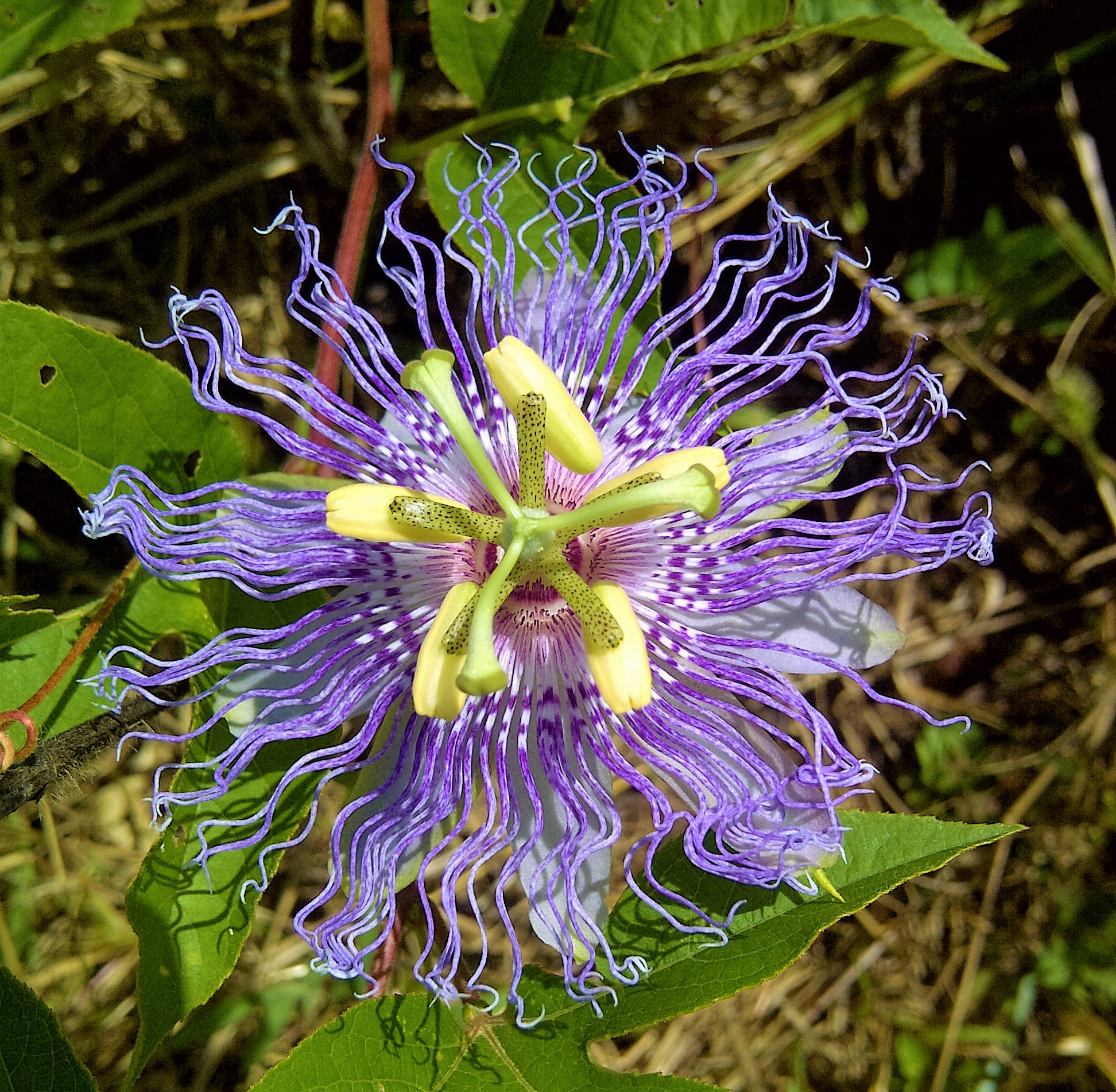
Through Our Own Window

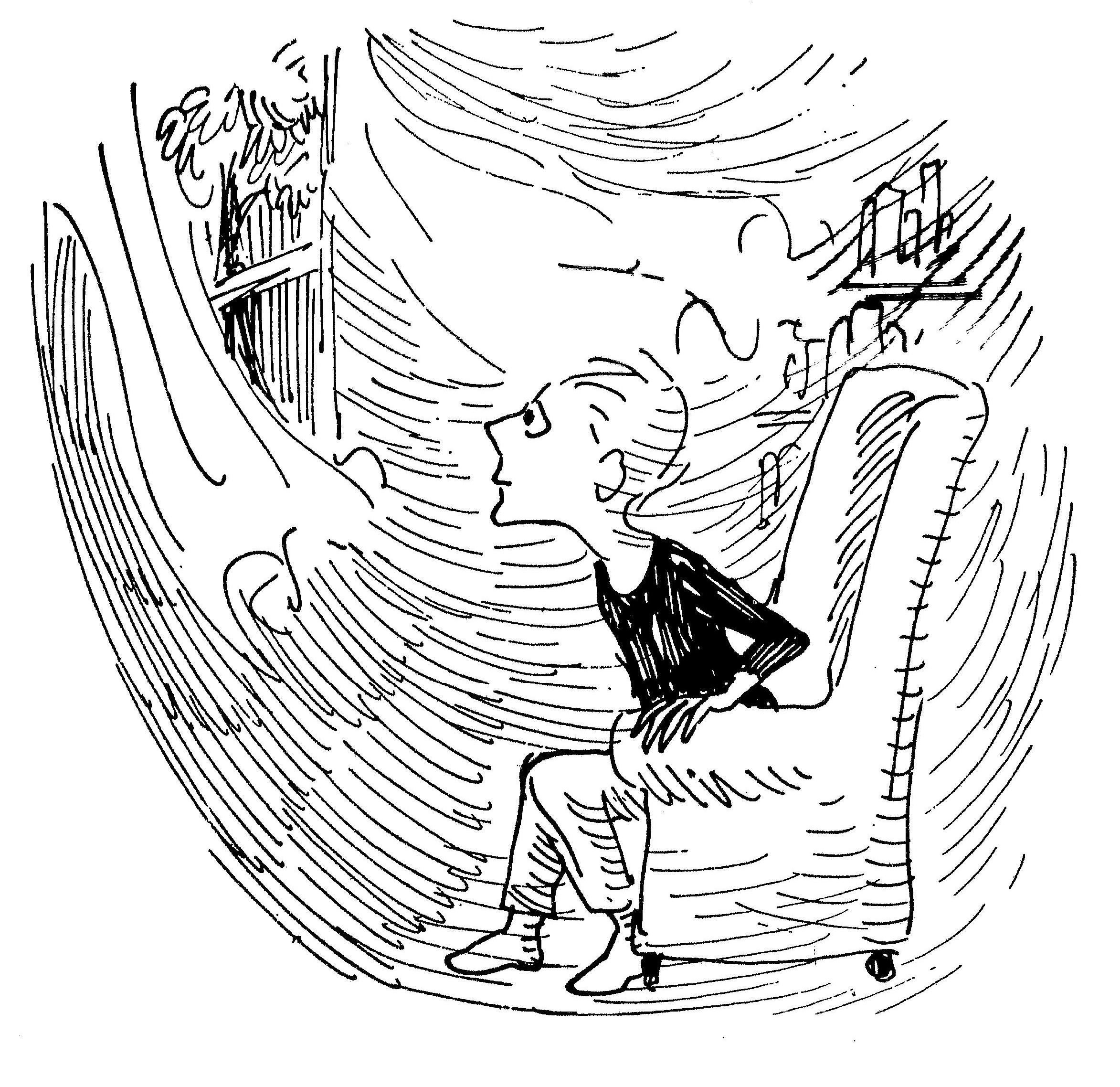
     And yet, even as he thought of all these things, he noticed somehow that the sky was a lovely shade of blue and that one cloud had the shape of a sailing ship. The tips of the trees held pale, young buds and the leaves were a rich deep green. Outside the window, there was so much to see, and hear, and touch—walks to take, hills to climb, caterpillars to watch as they strolled through the garden. There were voices to hear and conversations to listen to in wonder, and the special smell of each day.

—Norton Juster, The Phantom Tollbooth

This passage from the next to last page in the book, at least that’s where it’s found in my edition, has been coming to my mind a lot in the past few days. At this point in the story, Milo has returned to his bedroom from his incredible adventure and is feeling lonesome for the characters he shared the adventure with and feels eager to rejoin them for another trip. The tollbooth and car have been taken away though, by someone whose signature is blurred, for other boys and girls who need to be shown the way, to have their senses and awareness opened.

Milo begins to see his familiar surroundings with a whole new perspective compared to the one he at the beginning of the story. He sees new in the midst of old. I don’t think this delivers the message (at least it doesn’t deliver it to me) that what is is always what should be. In other words, I believe that sometimes we do need to change that which surrounds us rather than artificially molding our view of it — whatever that may mean. Opening our eyes and all our senses and looking through our own window with open senses can renew our perspective for what is beautiful in our world as well as what needs to change. Knowing the difference can be very tough because all is skewed by the lens and filter embedded within us, shaped by the total of our life experiences. When our eyes are open to what is truly beautiful, maybe we can then find the courage to be true to our own heart and change what is not.

illustration by Jules Feiffer

illustration by Jules Feiffer

Aside: I wonder of Norton Juster and Lucy Maud Montgomery, author of Anne of Green Gables, were friends in another time. Anne: “Isn’t it splendid there are so many things to like in this world?” Another truth from Anne, this one from Anne of Windy Poplars: “One can always find something lovely to look at or listen to….”

What is the Real Thing?

So they lived. Everything went along without change and everything was fine.

“What if my entire life, my entire conscious life, simply was not the real thing?”

“But what is the real thing?”

—Leo Tolstoy, The Death of Ivan Ilyich

I continue to re-explore some of the books that delivered crucial truths to me at a pivotal time in my life. The Death of Ivan Ilyich was the second book assigned in my Western Classics II class during the fall semester of 2002. Whenever I think of this story, the words that come to my mind first are “inauthentic life.” I read this story and cried for the Ivan in all of us, but mostly for the Ivan in me. I did not want to continue living my own inauthentic life. Mine was very different from Ivan’s, but still not real even though it may have appeared to be fine to those who shared my world at that time. The hope this story holds was a needed light.

Ivan chose the right career, married the right spouse, bought the right house, filled the house with the right things, had the right children, went through all the right motions of life. Only on his death bed did he realize these were not the real things of life. For too long, I had been going through the motions of the life that I felt was expected of me. I suppose I expected it of myself just as much as anyone else did. We all want to be happy, and when we are young we have a picture in our mind of how a happy life should look. We can put the external pieces in place yet know some of the pieces don’t really quite fit. We go on with each day anyway, hoping not only that nobody else notices but that we will not notice. Sometimes, it was impossible to not see clearly that the pieces of my life did not only not fit but were probably not the right pieces at all.

My copy of Ivan Ilyich is well-marked and annotated. The quotes I chose above are only those that seemed to gather together the messages I grappled with as I read this the first time and as I ponder it now. When I closed the last page for the first time, I cried —really cried— for close to an hour. Beginning to learn truths can do that to us. The hope and light held even in the dark story remained with me, though. Hope and light have always had a way of finding me and helping me to find my way.